Hot-water weed control for sensitive places
Professional weed treatment for schools, historic buildings, estates, councils and contractors—using water rather than routine liquid herbicide. Choose quiet pre-heated electric systems or high-output on-demand machines.
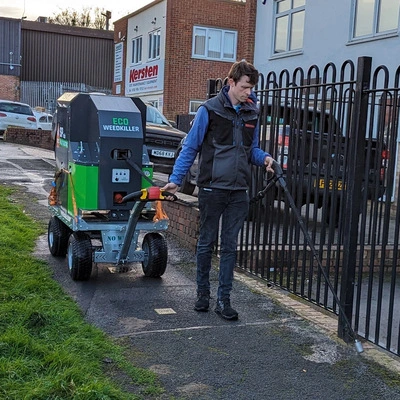
A high-energy treatment without spray residue
Use water as the thermal carrier—not a chemical active
Eco Weedkiller applies very hot water at controlled flow. The water transfers thermal energy into the plant and surrounding material, making the method particularly useful where herbicide residues, spray drift, noise or multifunction maintenance are key concerns.
Water-only treatment
No synthetic herbicide is applied to the site, and no chemical spray marker or active residue is left on the treated surface.
Heat reaches below the leaf
Water has high heat capacity and can carry useful thermal energy into joints, detritus and the shallow root environment.
Quiet electric working
The Garden and SP water-battery models are pre-heated before work, so treatment can be planned around schools, residents and visitors.
Multifunction capability
Selected PRO models combine weed treatment with pressure washing, graffiti removal and other hot- or cold-water maintenance tasks.
Three clearly different operating formats
Choose the range around how and where the team will work
Garden, Pro SP and Pro machines all use hot water, but they differ in heating method, route length, transport, noise and additional cleaning capability. Start with the operating format, then select the tank and output.
Eco Weedkiller Garden
Compact 25-litre pedestrian machines for courtyards, paths, landscaped areas and focused treatment where simple transport and mains charging are the priorities.
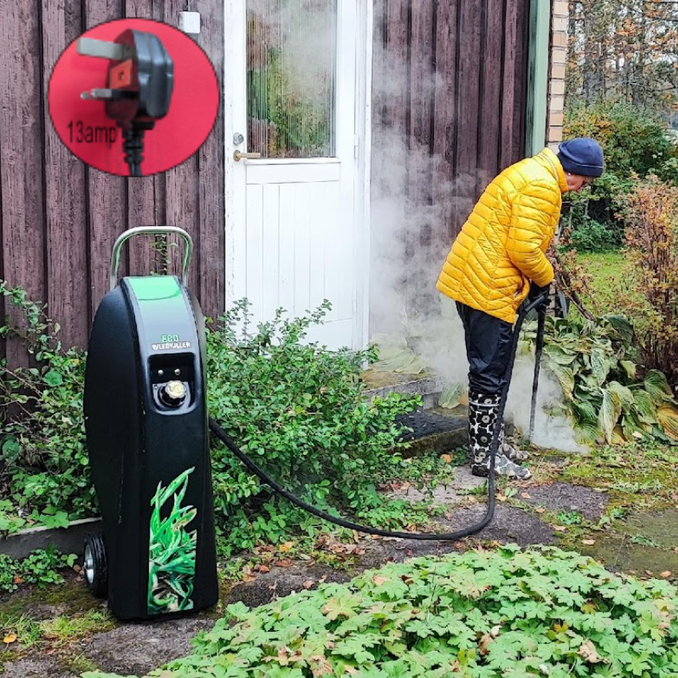 13A electric
EWK Garden 2 kW
Compact 25-litre hot-water treatment for smaller courtyards, paths, gardens and tightly managed sites.
- 25 L tank · approximately 8–10 m² per fill
- Standard UK 13 A / 230 V supply
- 3 m treatment hose and wheeled chassis
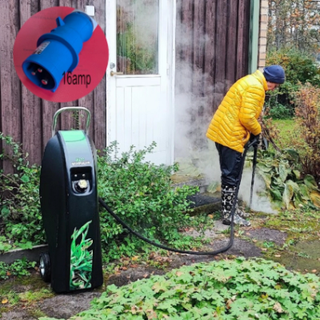 16A electric
EWK Garden 3 kW
The same compact 25-litre format with a higher-power supply for faster heating between small-site treatments.
- 25 L tank · approximately 8–10 m² per fill
- 16 A / 230 V blue industrial supply
- Faster recharge than the 2 kW version
Eco Weedkiller Pro SP
Pre-heated electric water-battery machines for professional routes where low on-site noise is important. Charge before work, transport the stored hot water and treat away from the power point.
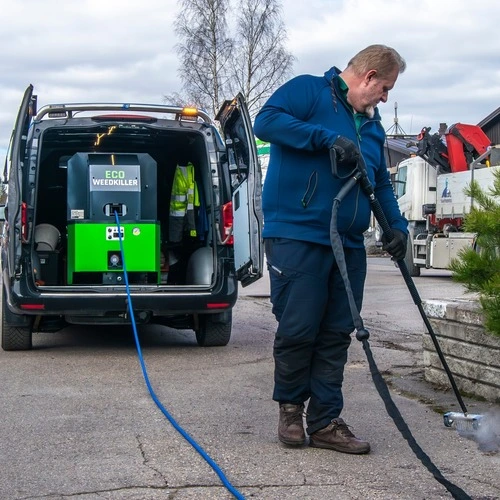 150 L electric
EWK SP Pro Mini
A transportable professional electric system for campuses, estates and parks where quiet operation matters.
- 150 L tank · approximately 50–75 m² per fill
- 20 m treatment hose
- Single- or three-phase charging
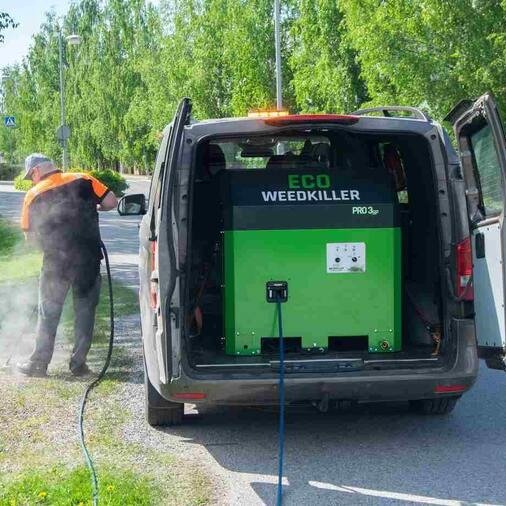 300 L electric
EWK SP3
A high-capacity, pre-heated electric system for planned routes through public, residential and heritage environments.
- 300 L tank · approximately 100–150 m² per fill
- 20 m automatic hose reel
- Retains operating heat after disconnection
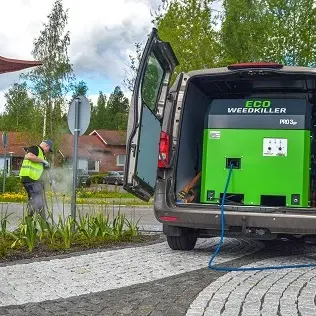 600 L electric
EWK SP6
The largest water-battery model for longer quiet-working routes and higher daily coverage without on-route combustion.
- 600 L tank · approximately 240–300 m² per fill
- 20 m automatic hose reel
- Three-phase professional charging
Eco Weedkiller Pro
On-demand diesel or hydraulic systems for longer routes, rapid refilling and high daily utilisation. Selected models also support pressure washing, surface cleaning and two-operator work.
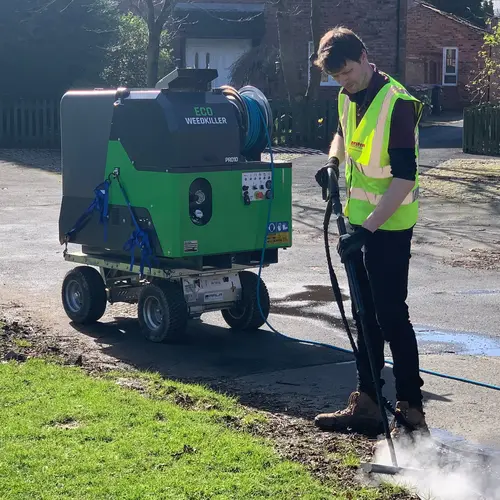 Single operator
EWK PRO10
A one-operator on-demand platform combining boiling-water weeding with professional cleaning and pressure-washing capability.
- 400 L tank · approximately 160–200 m² per fill
- 80 m treatment hose
- On-demand heating and multifunction cleaning
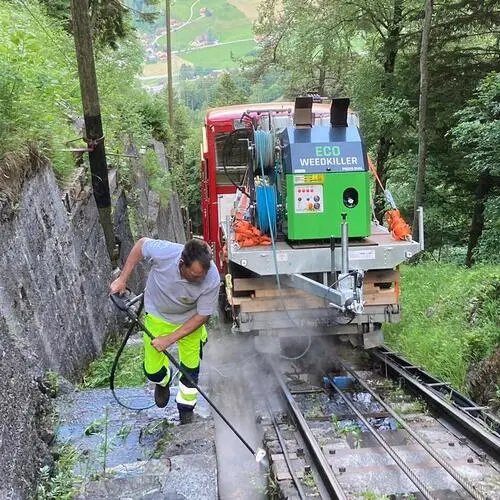 Two operators
EWK PRO20 Dual
A dual-hose municipal and contractor system for simultaneous two-person treatment, cleaning and public-realm maintenance.
- 310 L integrated tank
- 2 × 80 m treatment hoses
- Selectable single- or dual-operator output
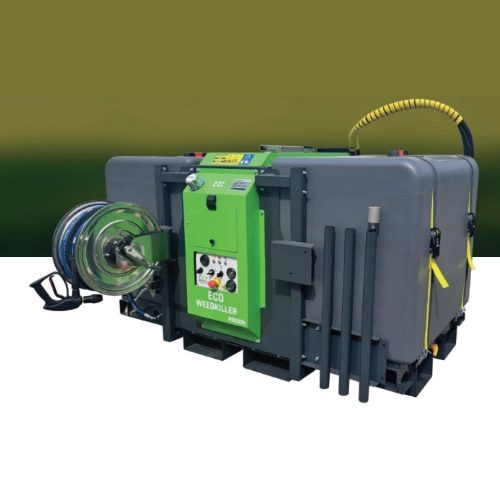 Hydraulic high output
EWK PRO30H
A vehicle-hydraulic, 800-litre high-output system for large municipal routes, infrastructure and intensive surface-management work.
- 800 L twin-tank capacity
- 30–35 L/min hot-water output
- Requires approximately 60 L/min hydraulic oil flow
Prices exclude VAT. Delivery, commissioning, training, mounting, hoses and accessories may change the final quotation. A measured demonstration is recommended before specifying a professional route.
How 100°C water transfers energy
It is the heat carried into the plant and root zone that does the work
Eco Weedkiller uses a controlled flow of very hot water. The objective is to deliver enough thermal energy to damage the visible plant and carry heat below the surface, rather than simply scorching the leaf.

Water is a dense and controllable heat carrier
For the same stored thermal energy, liquid water occupies far less volume than steam or air. That allows a low-pressure stream to place a substantial, measurable heat load directly onto the weed and into the surrounding joint or growing medium.
The diagram compares energy storage at atmospheric pressure; it illustrates why water can carry useful heat efficiently, not a guaranteed treatment rate.

Hot water can follow existing channels into the soil
Roots loosen the soil around them and create pathways used by rainfall and irrigation. The Eco Weedkiller illustration shows hot water following those same channels, carrying heat beyond the visible foliage and towards the shallow root environment.
Penetration varies with compaction, soil type, moisture, root depth and the volume applied. Deep or established perennial roots may require repeated treatment.

The target is the root system—not only the top growth
The manufacturer’s comparison illustrates the intended difference between sufficient hot-water treatment and methods concentrated mainly above the soil line. By transferring heat below the surface, the aim is to weaken or destroy more of the root system and reduce the plant’s ability to recover.
This is an explanatory comparison rather than a universal performance claim. Results depend on the weed, treatment timing and site conditions.
From explanation to site practice
Prepare, treat and return at the right interval
Remove excess growing medium
Sweep or extract heavy detritus first so the heat is not wasted on loose material above the target.
Apply a controlled volume
Deliver hot water directly to the weed and joint at the model’s specified operating temperature and flow.
Monitor regrowth and repeat
Schedule follow-up treatment around species, season and root depth, combining the machine with prevention and surface care.
Designed around sensitive and public-facing estates
Four audiences where hot water makes practical sense
Machine choice depends on route length, water logistics, power supply, carrier payload, public occupancy and whether the equipment must also undertake cleaning work.
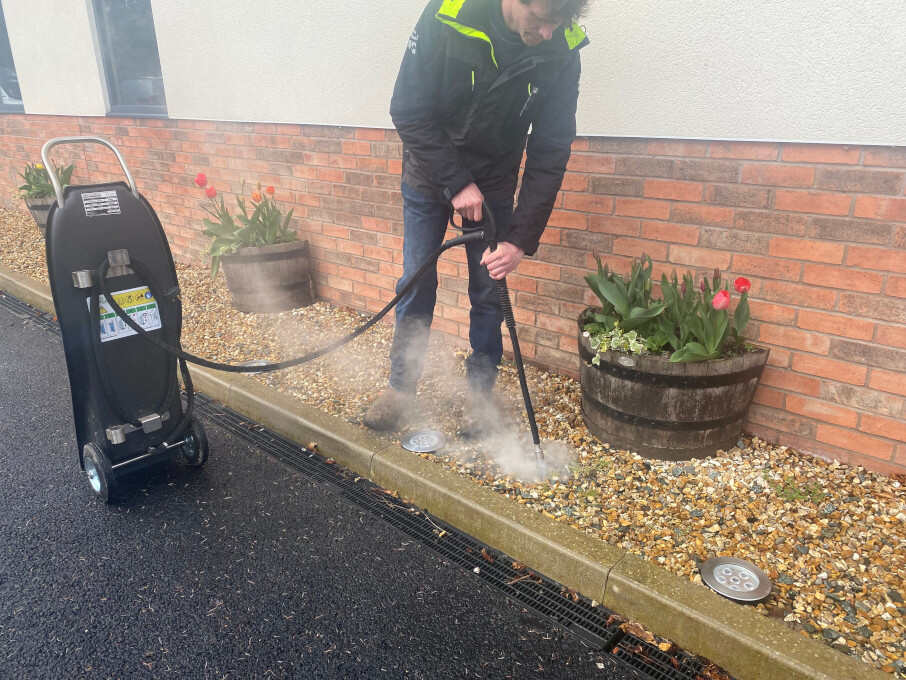 Education
Schools and education estates
Quiet electric treatment for entrances, paths, courtyards and play-area surroundings, scheduled around occupancy and exclusion zones.
Explore education-estate support →.webp) Heritage
HeritageHistoric buildings and heritage sites
Controlled water treatment around paving, gravel, courtyards and visitor routes where chemical residue is undesirable and surface testing matters.
Explore heritage-site maintenance →EstatesEstates and visitor destinations
Treat formal areas, paths, car parks and access routes, with larger models adding cleaning and pressure-washing capability to the fleet.
Explore estate and contractor support →Public realmCouncils and contractors
Build route-based hot-water treatment into an evidence-led IWM programme for streets, housing, parks, cemeteries and play areas.
Explore the local-authority journey →Responsible use
Boiling water is effective because it carries serious heat
Eco Weedkiller avoids routine herbicide, but it is not risk-free. Operators need machine-specific training, suitable PPE and a written assessment for people, surfaces, drainage, access and hot-water handling.
- Set a managed exclusion zone around pupils, visitors, residents and other site users.
- Test sensitive materials first; very hot water can deform thin plastics and damage unsuitable finishes.
- Control runoff, drainage and treatment around water bodies, electrical assets and vulnerable planting.
- Follow the current filling, heating, pressure-release and working-mode instructions for the selected machine.
- Do not describe the diesel-heated PRO models as silent; quiet-operation claims apply to the pre-heated electric range.
One method within a wider weed-management programme
Compare hot water with Kersten’s other weed-control approaches
No single method suits every surface, species or operating constraint. Kersten can combine prevention, sweeping, mechanical removal and different thermal technologies into a route-specific Integrated Weed Management plan.
Mechanical weed-control equipment
Brush, cut and remove growth while also clearing the detritus and growing medium that supports repeat establishment.
Explore mechanical methods → Hot-air treatmentHot-air weed removers
Target top growth with dry thermal energy where carrying and refilling water is less practical.
Explore hot-air equipment → Mobile thermal lancesRipagreen treatment systems
Professional hand-held thermal kits for fast, targeted work across estates, paths and public spaces.
Explore Ripagreen → Infrared and hot airHoaf thermal weed management
Purpose-built infrared and hot-air systems for defined widths, larger areas and repeatable route work.
Explore Hoaf systems → Surface restorationWeed brushes
Remove established growth, moss and organic build-up from hard surfaces while restoring joints and edges.
Explore weed brushes → Programme planningIntegrated Weed Management
Combine prevention, monitoring, surface care and treatment choices in a documented plan for the whole estate.
Build an IWM programme →Specification, manuals and programme planning
Useful Eco Weedkiller and Integrated Weed Management resources
These links support early product selection, operator preparation and the wider site-maintenance strategy.
Complete hot-water weeder range
Compare Garden, SP and PRO families, capacities and application types.
Open the range guide → ManualEco Weedkiller Garden manual
Operating guidance for the compact 25-litre electric machines.
Open the Garden manual → ManualSP3 and SP6 manual
Instructions for the professional pre-heated electric water-battery models.
Open the SP manual → ManualPRO10 and PRO20 Dual manual
Machine instructions for the on-demand professional systems.
Open the PRO manual → PreventionWeed-prevention brochure
Reduce the growing medium and surface conditions that make repeat treatment harder.
Read the prevention guide → Public sectorCouncil IWM and NAP guide
Place hot water within a documented, preventative-first Integrated Weed Management programme.
Open the council guide →Frequently asked questions
What buyers and operators usually need to know
How does hot water kill weeds?+
Very hot water rapidly damages plant cells and stops normal biological function. Unlike hot air, water also carries substantial heat into surface joints and the shallow root environment. Effective results still depend on water volume, temperature, species, growth stage and site preparation.
What is the difference between the SP and PRO ranges?+
The Garden and SP machines heat and store water before work, allowing quiet treatment away from the charging point. The PRO machines heat water on demand for sustained output and can add pressure washing and cleaning functions, but they use diesel heating or a vehicle hydraulic interface.
How long do the pre-heated machines retain useful heat?+
The existing Kersten guidance states that the insulated electric systems can retain water above the operating threshold for at least eight hours after disconnection, subject to model, starting temperature and conditions.
Are all Eco Weedkiller machines virtually silent?+
No. Quiet-operation claims apply to the pre-heated electric Garden and SP models while treating. The on-demand PRO machines incorporate engines, burners or a hydraulic host vehicle and should be assessed accordingly.
How much area can one tank treat?+
Coverage varies from roughly 8–10 m² for a 25-litre Garden unit to around 240–300 m² for the 600-litre SP6. Weed density, soil depth, temperature, flow and operator technique can materially change real-world coverage.
Can the hot water damage surfaces?+
Most robust external surfaces can be assessed and treated safely, but boiling water can deform thin plastics, injure people and affect unsuitable finishes. Test unfamiliar materials and complete a task-specific risk assessment.
Do operators need a pesticide application licence?+
Hot water is not a pesticide application, but the employer remains responsible for equipment training, hot-water safety, PPE, work equipment, public exclusion and all other applicable workplace controls.
Evidence and practical applications
Read how hot water fits real sites
The Root of the Problem: why 100°C+ water matters
Understand heat transfer, root-zone treatment and why prevention improves performance.
Read the article →Managing weeds and cleaning wet-pour play areas
A practical example combining low-pressure weed treatment with surface cleaning.
Read the playground case →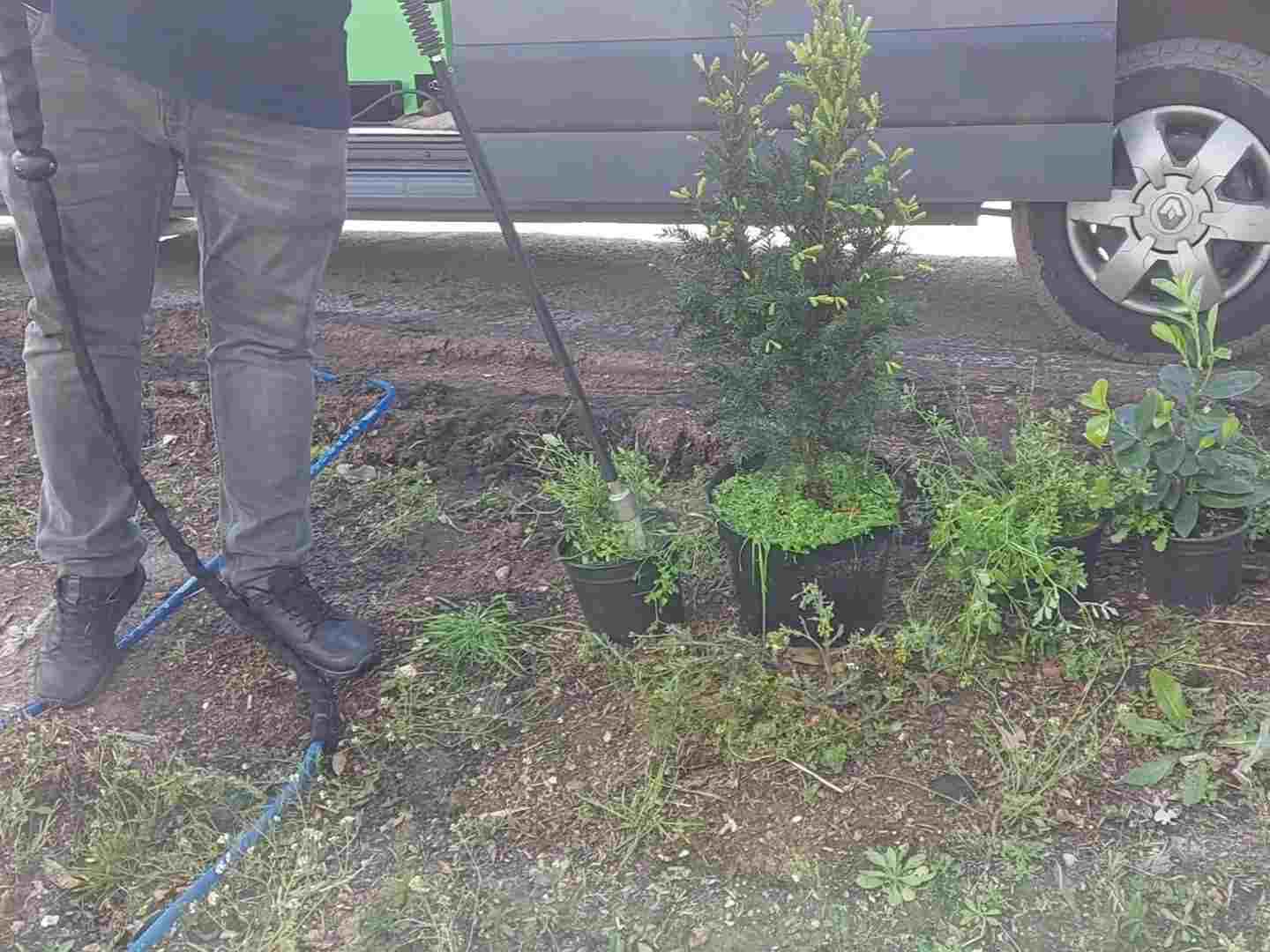
Eco Weedkiller PRO10 in a plant nursery
See how one machine can support weeding, cleaning and organic-production objectives.
Read the nursery case →Why Eco Weedkiller suits school estates
Review the case for quiet, water-only treatment around occupied education sites.
Read the school article →Prove the route, water use and operating plan before procurement
A measured demonstration can compare treatment speed, coverage, refill logistics, noise, access and the wider cleaning workload on your actual site.